

The Math Never Worked
Win rates are down. Deal cycles are up. And we’re still blaming the reps.

I used to think longer deal cycles meant reps weren’t pushing hard enough.
When a deal stalled at 60 days, I knew exactly what to do. More calls. More emails. Tighter pipeline reviews. Weekly commits. Daily stand-ups. Pressure until something moved.
It’s what I was trained to do. It’s what every sales leader is trained to do.
Push harder. Inspect more. Demand activity.
The data says I was making it worse.
Outreach just released their 2025 Sales Report. The numbers should terrify every CRO who’s still running the old playbook.
Win rates fell from 31-40% in 2024 to 21-25% in 2025.
Let that land for a second. The largest cohort of sales teams went from winning roughly one in three deals to winning roughly one in four - in a single year.
But it gets worse.
34% of revenue teams now report deal cycles stretching 1-2 full quarters. Not outliers. Not complex enterprise deals. The average.
And the kicker: only 7% of organizations achieve above 90% forecast accuracy.
Seven percent.
Which means 93% of CROs are walking into board meetings with forecasts they know - on some level - are fiction.
Here’s what nobody wants to say out loud:
The response to all of this has been more of what caused it.
Cycles getting longer? Push harder to compress them.
Win rates dropping? Increase activity to fill the gap.
Forecasts missing? Inspect pipeline more frequently.
More pressure. More volume. More intensity.
And the results keep getting worse.
I spent years believing that sales performance was a willpower problem.
That reps who missed quota weren’t grinding hard enough. That deals stalled because someone didn’t follow up fast enough. That forecast misses meant pipeline wasn’t being scrubbed properly.
I was wrong.
The problem isn’t effort. The problem is physics.
When you push harder on a buyer who isn’t ready, they don’t speed up. They slow down. Or they ghost. Or they bring in more stakeholders to diffuse the pressure.
The system taught us that force creates motion. The data says force creates friction.
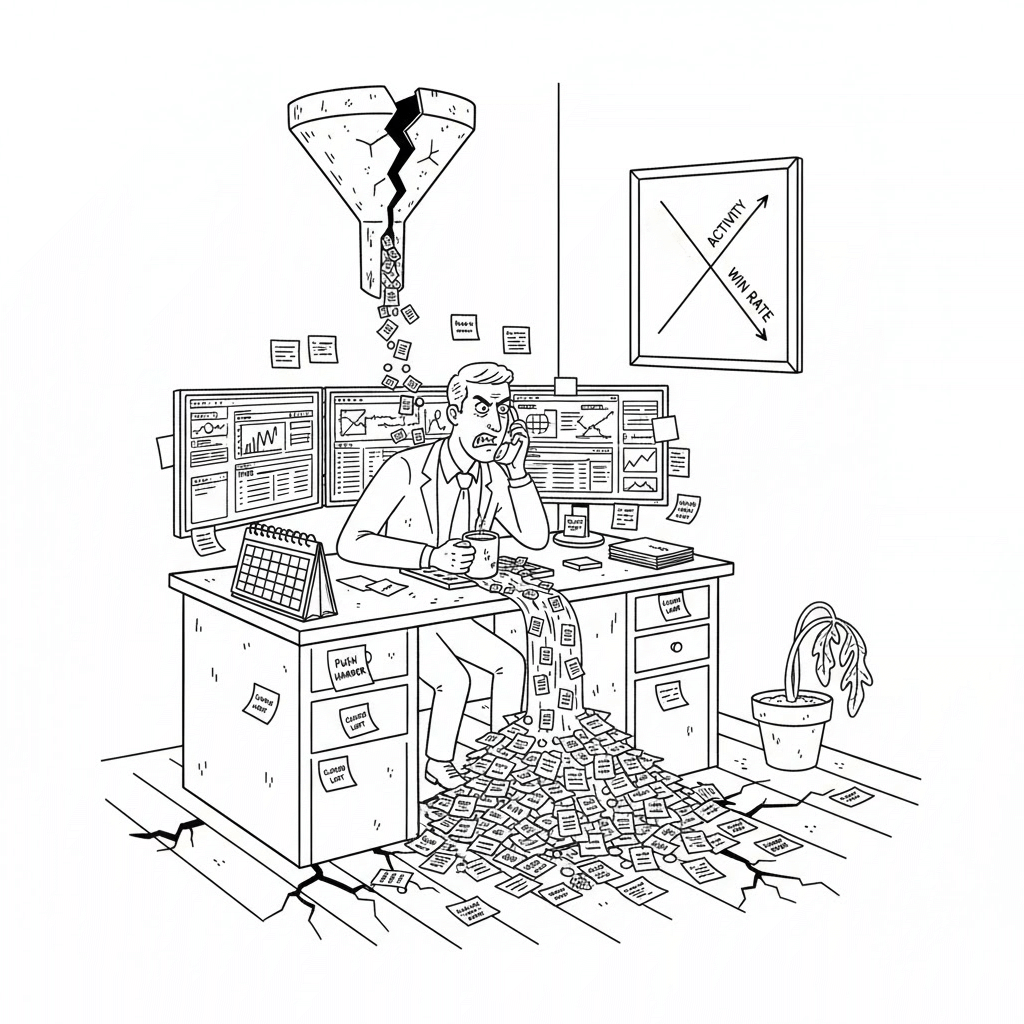
I’m not saying activity doesn’t matter. It does.
But we’ve been measuring the wrong activity. Optimizing for the wrong outcomes. Training reps to do things that feel productive but actually damage the sale.
When win rates drop and cycles lengthen simultaneously - that’s not a rep problem. That’s a system problem.
And no amount of pipeline reviews will fix a broken system.
The uncomfortable truth for CROs:
You’re being asked to forecast revenue from a pipeline built on physics that no longer work.
Your reps aren’t failing. The math is failing.
And until we’re willing to question the math, we’ll keep demanding more activity while watching the numbers get worse.